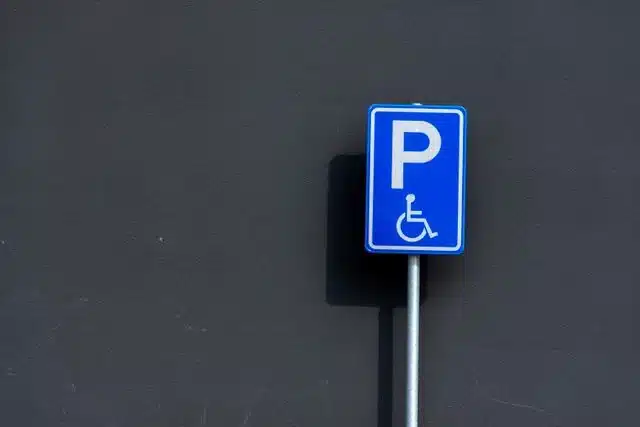
California property owners and commercial tenants operate under one of the strictest disability rights regulatory frameworks in the United States. While federal accessibility laws dictate minimum physical design standards, California’s Unruh Civil Rights Act turns physical non-compliance into a direct source of statutory financial liability. Understanding how state legislation intersects with what the ADA requires is essential for managing commercial real estate, parking facilities, and exterior paths of travel without facing costly litigation.
What Is the California Unruh Civil Rights Act?
California Civil Code Section 51, officially known as the Unruh Civil Rights Act, is a foundational state civil rights statute that guarantees full and equal accommodations, advantages, facilities, privileges, or services in all business establishments across California. Enacted in 1959, the statute prohibits discrimination based on sex, race, color, religion, ancestry, national origin, disability, medical condition, genetic information, marital status, sexual orientation, citizenship, primary language, or immigration status.
A critical shift occurred in 1992 when the California Legislature enacted Civil Code Section 51(f), explicitly establishing that any violation of the federal Americans with Disabilities Act of 1990 also constitutes a direct violation of the Unruh Civil Rights Act. This statutory integration means that a physical barrier on a private property such as a non-compliant curb ramp or an improperly painted access aisle violates both federal accessibility guidelines and California state civil rights law simultaneously.
The scope of the Unruh Act applies to all commercial entities operating as public accommodations or private businesses open to the general public. This includes shopping centers, office parks, retail stores, restaurants, private parking lots, and healthcare facilities. Unlike public entities governed by Title II accessibility standards, private commercial properties facing Unruh Act allegations are exposed to private civil lawsuits brought by individuals alleging denial of equal physical access.
Federal ADA vs. Unruh Act: Key Differences in Financial Liability
The financial consequence of physical non-compliance differs fundamentally between federal law and California state law. Under Title III of the federal Americans with Disabilities Act, private litigants can seek injunctive relief a court order requiring the property owner to correct the physical barrier along with reasonable attorney fees and court costs. Federal law does not award monetary damages or statutory financial penalties to private plaintiffs in Title III lawsuits.
California Civil Code Section 52(a) drastically expands financial exposure by establishing automatic statutory damages for Unruh Act violations. A plaintiff who establishes a violation is entitled to recover actual damages plus an amount determined by a court or jury, subject to a mandatory statutory minimum of $4,000 for each individual instance of discrimination, in addition to attorney fees.
| Regulatory Feature | Federal ADA (Title III) | California Unruh Civil Rights Act |
|---|---|---|
| Primary Statutory Authority | 42 U.S. Code Section 12181 et seq. | California Civil Code Section 51 & 52 |
| Monetary Damages for Plaintiffs | No monetary damages awarded to private plaintiffs | Statutory minimum of $4,000 per violation plus actual damages |
| Legal Remedy | Injunctive relief (mandatory physical correction) | Injunctive relief plus mandatory statutory financial penalties |
| Attorney Fee Recovery | Allowed for prevailing plaintiffs | Mandatory for prevailing plaintiffs |
| Application to Physical Barriers | Triggers upon presence of non-compliant barrier | Triggers when non-compliant barrier causes actual denial of access |
Because California Civil Code Section 51(f) incorporates federal standards into state law, plaintiffs filing accessibility claims in California routinely combine federal ADA allegations with state Unruh Act claims in state or federal court. This dual-pleading strategy enables litigants to leverage federal design guidelines while claiming California’s $4,000 minimum statutory damage penalty per visit.
Statutory Damage Limits and Defenses Under Civil Code Section 55.56
To prevent predatory litigation while maintaining accessibility standards, the California Legislature passed reform measures codified in California Civil Code Section 55.56. Under Civil Code Section 55.56(a), statutory damages under Civil Code Section 52(a) may only be recovered if a physical violation actually denied the plaintiff full and equal access to the business establishment on a specific occasion.
Civil Code Section 55.56(b) specifies that a plaintiff experiences a denial of full and equal access only if they personally encountered the physical barrier or were deterred from accessing the site on a specific occasion. Furthermore, Civil Code Section 55.56(c) establishes that a plaintiff must demonstrate that the encountered barrier caused difficulty, discomfort, or embarrassment related to their specific disability.
How CASp Inspections Reduce Exposure to Unruh Act Claims
California Senate Bill 1186 and Senate Bill 269 created statutory liability protections for property owners who proactively evaluate their premises using a Certified Access Specialist (CASp). A CASp is an individual certified by the State of California Division of the State Architect to inspect buildings and sites for compliance with state and federal accessibility codes. What that inspection actually produces, and how long the report holds, is set out under the state certified access specialist.
Under California Civil Code Section 55.56(g)(3)(A), a business or property owner who obtains a CASp inspection report prior to being served with a lawsuit qualifies for a 120-day grace period. During this 120-day window, statutory minimum damages are eliminated for any technical barrier identified in the CASp report, provided the owner corrects the non-compliant conditions within that timeframe.
For small businesses meeting specific gross receipt and employee thresholds under Civil Code Section 55.56(e)(1), statutory damages are reduced from $4,000 down to $1,000 per violation if all non-compliant physical barriers are corrected within 60 days of receiving a summons or written demand. Furthermore, businesses that obtain CASp certification qualify for a court stay and an early evaluation conference, which halts expensive litigation discovery while a neutral judge reviews the physical site conditions.

Proactive Compliance for California Commercial Properties
Navigating the intersection of federal design standards and California state civil rights legislation requires continuous oversight of exterior physical assets. Because Unruh Civil Rights Act litigation centers on physical barriers within parking facilities, exterior walkways, and building entrances, keeping exterior pavement and accessibility elements compliant is the primary defense against liability.
Commercial property managers, owners, and developers should regularly audit their exterior grounds against the California Building Code Chapter 11B and schedule formal CASp evaluations. Remaining informed on evolving state statutory requirements ensures commercial sites remain safe, welcoming, and accessible to every member of the public while mitigating exposure to costly legal disputes. Stay updated with state regulatory shifts by reviewing official guidance and maintaining verified site compliance records.
| Ref # | Autor u Organismo | Documento Oficial y Sección | URL Oficial de Consulta |
|---|---|---|---|
| 1 | California State Legislature | California Civil Code Section 51 – Unruh Civil Rights Act | https://leginfo.legislature.ca.gov/…§ionNum=51 |
| 2 | California State Legislature | California Civil Code Section 52 – Civil Actions for Protection of Rights | https://leginfo.legislature.ca.gov/…§ionNum=52 |
| 3 | California State Legislature | California Civil Code Section 55.56 – Construction-Related Accessibility Claims | https://leginfo.legislature.ca.gov/…§ionNum=55.56 |