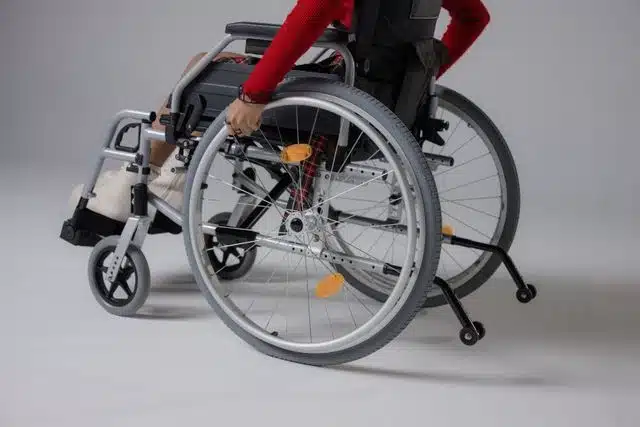
Enacted in 1990, the Americans with Disabilities Act (ADA) is a comprehensive federal civil rights law designed to eliminate discrimination against individuals with disabilities. For commercial property owners, facility managers, and paving contractors in California, understanding the ADA is not merely a matter of general legal awareness it directly dictates physical infrastructure standards across private and public properties. Operating a commercial facility in California requires navigating two distinct layers of accessibility rules: federal regulations and state-level building codes. While federal standards set the nationwide baseline, California enforces stricter dimensional requirements, unique signage mandates, and severe statutory penalties for non-compliance. Failing to account for these specific requirements exposes property owners to immediate civil litigation under state law.
What is the Americans with Disabilities Act (ADA)?
The Americans with Disabilities Act is divided into five distinct titles, each addressing different operational domains such as employment, public entities, telecommunications, and miscellaneous legal provisions. For commercial real estate owners and managers, Title III of the law represents the primary regulatory focus. Title III mandates that no individual shall be discriminated against on the basis of disability in the full and equal enjoyment of the goods, services, facilities, privileges, advantages, or accommodations of any place of public accommodation.
In practical terms, Title III establishes that physical barriers must not prevent individuals with disabilities from entering a property, navigating exterior walkways, accessing parking facilities, or using interior amenities. The federal government enforces these rules through the 2010 ADA Standards for Accessible Design, which establish detailed technical specifications for physical elements ranging from entrance slopes to curb cutouts. However, in California, federal regulations represent only the starting point for compliance.
Understanding Title III: Commercial Facilities vs. Public Accommodations
Under federal regulations established in 28 CFR Section 36.104, Title III applies to two distinct property classifications: places of public accommodation and commercial facilities. Places of public accommodation include private entities that affect commerce across 12 specific categories, such as hotels, restaurants, retail stores, banks, shopping centers, and private educational institutions. Commercial facilities include non-residential properties whose operations affect commerce such as warehouses, factories, and office buildings that do not offer direct sales or services to the general public.
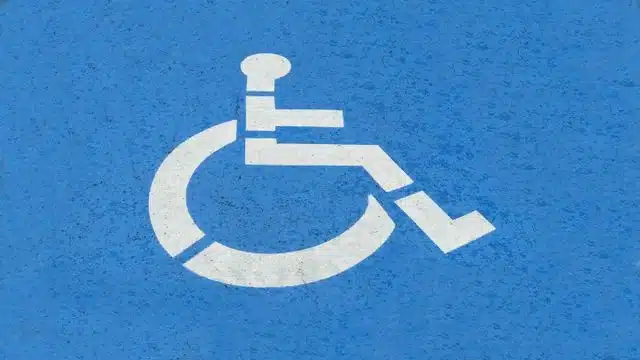
For existing places of public accommodation, Title III mandates the removal of architectural barriers in existing facilities where such removal is “readily achievable” defined under 28 CFR Section 36.304 as easily accomplishable and able to be carried out without much difficulty or expense. Examples include restriping a parking lot, installing commercial ramps, or lowering public telephone counters. Conversely, when a commercial facility undergoes physical alterations or new construction, strict adherence to current accessibility codes is mandatory regardless of cost feasibility, triggering mandatory upgrades along the entire path of travel serving the altered area.
Why ADA Compliance in California is Different: Federal Standards vs. CBC Chapter 11B
California enforces its accessibility mandates through the California Building Code Chapter 11B, located within Title 24, Part 2 of the California Code of Regulations. A fundamental legal principle in accessibility compliance is that whichever standard provides greater access or protection to individuals with disabilities prevails. Because California regulations are consistently more stringent than the 2010 ADA Standards, compliance with federal guidelines alone is insufficient to protect property owners in California from legal liability.
Key dimensional and design distinctions illustrate this regulatory gap. While the 2010 ADA Standards Section 502.2 requires a standard accessible parking space to measure at least 96 inches (8 feet) in width, CBC Section 11B-502.2 mandates a minimum width of 108 inches (9 feet) for standard accessible stalls. Van-accessible stalls under CBC Chapter 11B must measure 144 inches (12 feet) in width unless structured as a 108-inch stall paired with an 8-foot access aisle. Additionally, California explicitly mandates a minimum parking stall length of 216 inches (18 feet) and requires specific secondary signage, such as the “Minimum Fine $250” text under CBC Section 11B-502.6.2, alongside mandatory tow-away warning signs at property entrances under CBC Section 11B-502.8. Checking your site against current ada parking requirements is a vital step toward maintaining full site accessibility.
6 unchecked items detected. Under California Civil Code Section 52(a), a single lawsuit carries $4,000 in statutory damages plus plaintiff attorney fees (typically $10,000+). Multiple visits or plaintiffs multiply this liability.
Financial Exposure: The Unruh Civil Rights Act and California Statutory Penalties
The financial stakes of ADA non-compliance in California are significantly higher than in most other states due to the intersection of federal law and state civil rights legislation. At the federal level, Title III allows private plaintiffs to seek injunctive relief (an order forcing the property owner to fix the violation) and attorney fees, but it does not award monetary damages to private individuals.
In California, however, California Civil Code Section 51(f) explicitly stipulates that any violation of the federal ADA also constitutes a violation of the Unruh Civil Rights Act. This connection triggers California Civil Code Section 52(a), which grants private plaintiffs statutory minimum damages of $4,000 for each individual occurrence or instance of discrimination, in addition to attorney fees. Crucially, plaintiffs are not required to prove intentional discrimination to recover statutory damages under the Unruh Act the mere physical existence of a non-compliant barrier that the plaintiff encountered is sufficient to establish liability. Consequently, minor physical errors such as faded paint lines, incorrect sign heights, or slightly excessive ramp slopes frequently lead to substantial legal settlements.
How Property Owners Can Mitigate ADA Legal Risks with a CASp Inspection
To protect commercial property owners from abusive accessibility litigation, California enacted the Construction-Related Accessibility Standards Compliance Act. Under California Civil Code Section 55.56, property owners can proactively hire a Certified Access Specialist (CASp) to conduct a professional inspection of their facility’s exterior paths of travel, parking facilities, and building entrances.
Obtaining a CASp inspection prior to being served with a lawsuit grants the property owner the legal status of a “Qualified Defendant.” This status provides key procedural protections under California law, including the right to request a 90-day court stay of construction-related accessibility claims, an early settlement conference overseen by the court, and potential reductions in statutory damages (from $4,000 down to $1,000 or $2,000 per violation) if identified barriers are corrected within specific statutory timeframes (typically 30 to 60 days). Engaging a CASp professional provides an authoritative roadmap for achieving full compliance under CBC Chapter 11B while establishing a documented legal defense.
Staying informed on evolving California Building Code standards is essential for preserving property value and avoiding costly civil litigation. Subscribe to our educational newsletter to receive technical regulatory updates, compliance guides, and expert insights tailored specifically for California property owners and facility managers.
References
-
U.S. Department of Justice. (2010). 28 CFR Part 36 – Nondiscrimination on the Basis of Disability by Public Accommodations and in Commercial Facilities, Section 36.104 and Section 36.304 ADA.gov. https://www.ada.gov/law-and-regs/title-iii-regulations/
-
California State Legislature. California Civil Code Section 51(f) and Section 52(a) (Unruh Civil Rights Act) California Legislative Information. https://leginfo.legislature.ca.gov/
-
California State Legislature. California Civil Code Section 55.56 (Construction-Related Accessibility Standards Compliance Act) California Legislative Information. https://leginfo.legislature.ca.gov/
-
California Building Standards Commission. (2022). 2022 California Building Code, Title 24, Part 2, Chapter 11B, Section 11B-502.2, Section 11B-502.6.2, and Section 11B-502.8 Department of General Services. https://www.dgs.ca.gov/DSA/Codes
-
U.S. Department of Justice. (2010). 2010 ADA Standards for Accessible Design, Section 502.2 ADA.gov. https://www.ada.gov/law-and-regs/design-standards/2010-stds/
All references verified and publicly accessible
adapaving.org